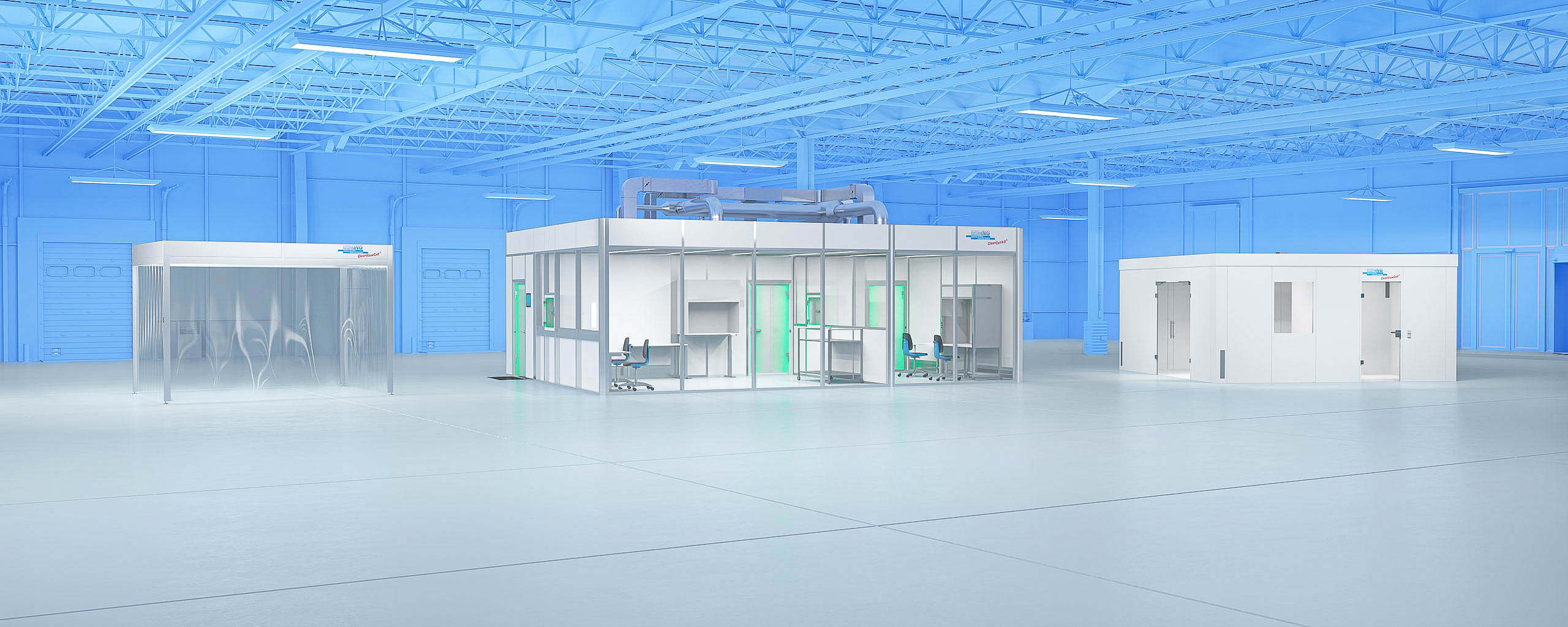

Are you looking for a clean room with everything that goes with it? Then you've come to the right place!
At Schilling Engineering, we plan and build cleanroom systems and support our customers on their way to an optimal cleanroom solution.
Thanks to our many years of experience as cleanroom manufacturer, we have extensive know-how to meet even the highest requirements in cleanroom technology. The focus is particularly on adaptation to your individual needs and a flexible, expandable design. This gives you a stable process environment with which you can also react to future changes. All according to international standards with maximum energy efficiency.
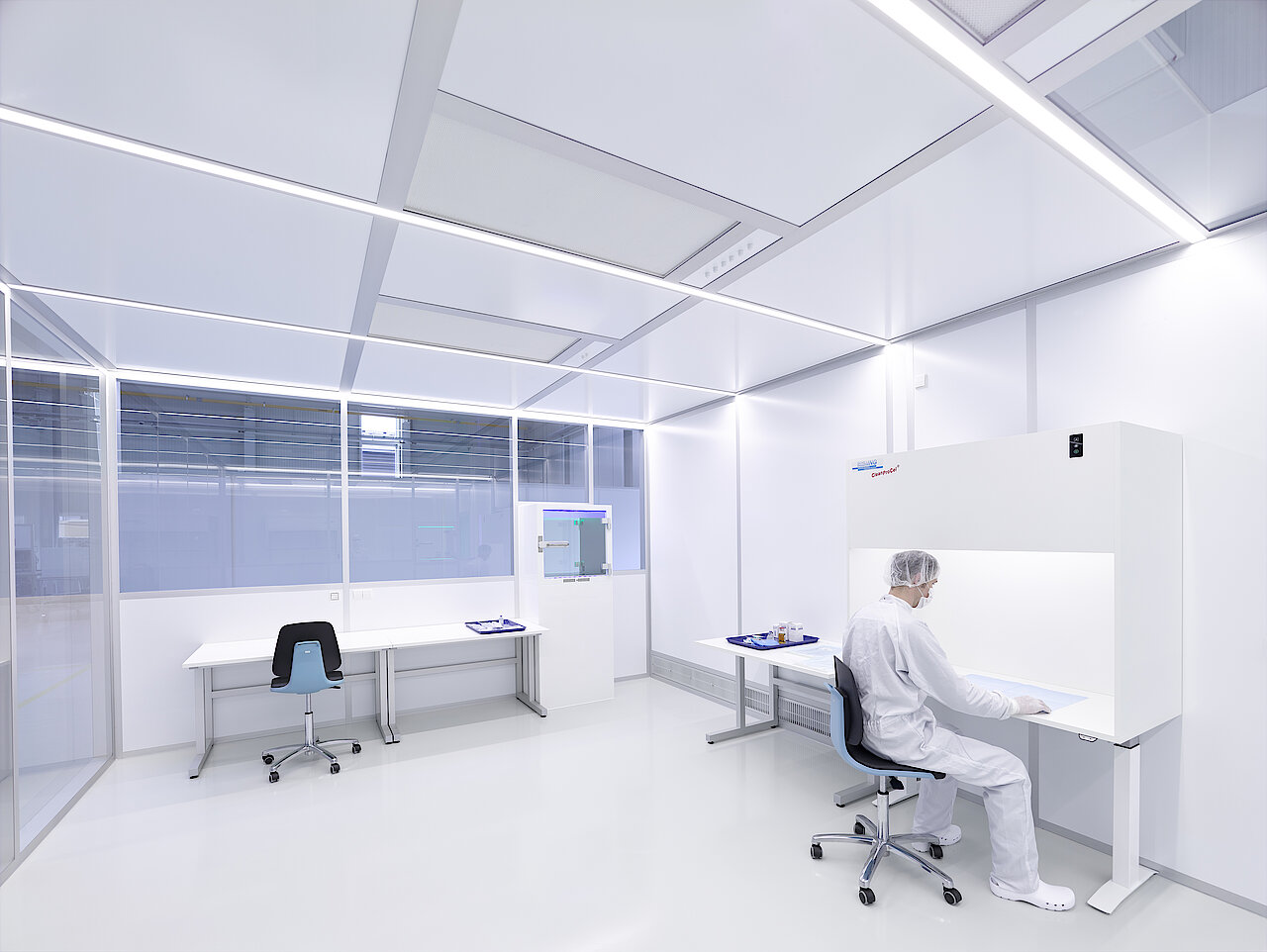
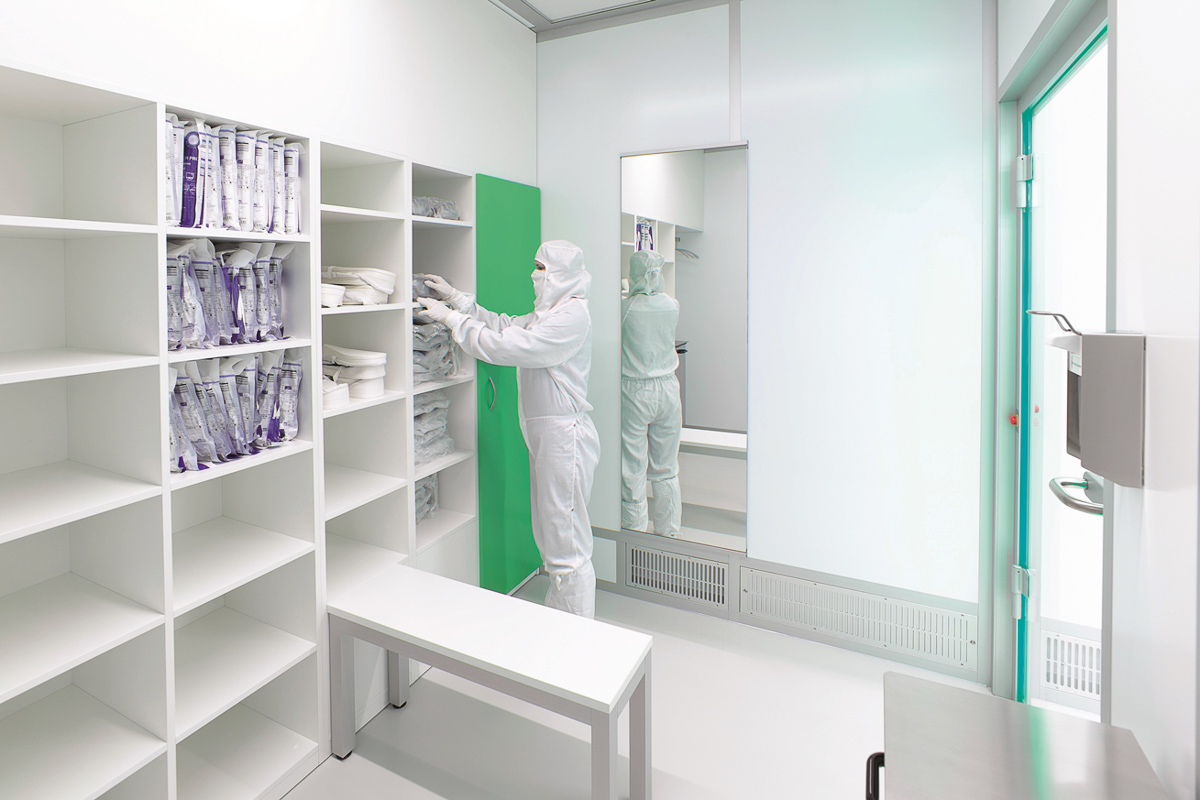
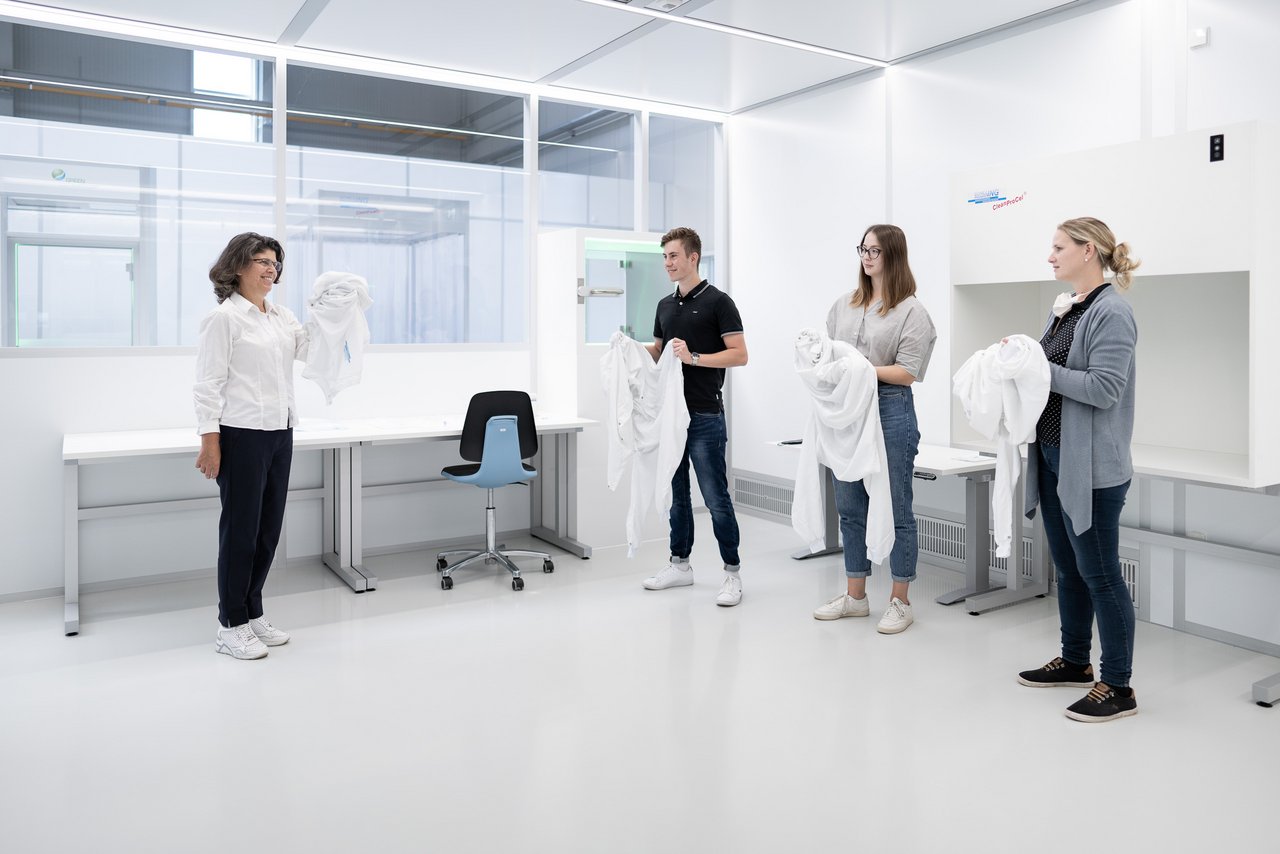
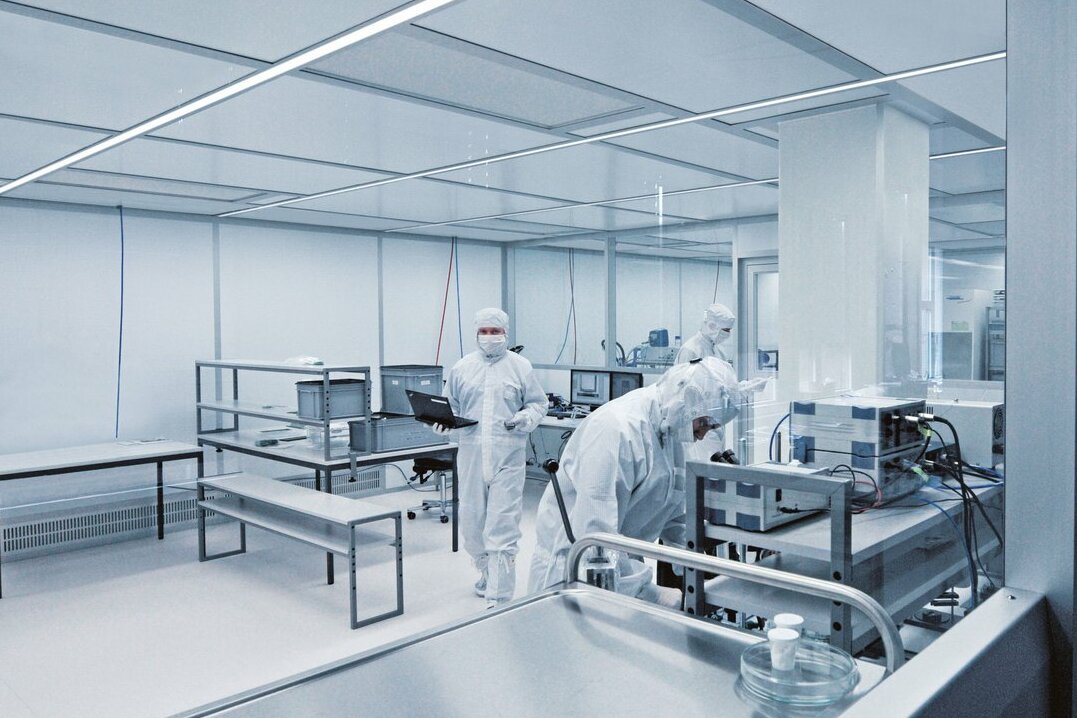
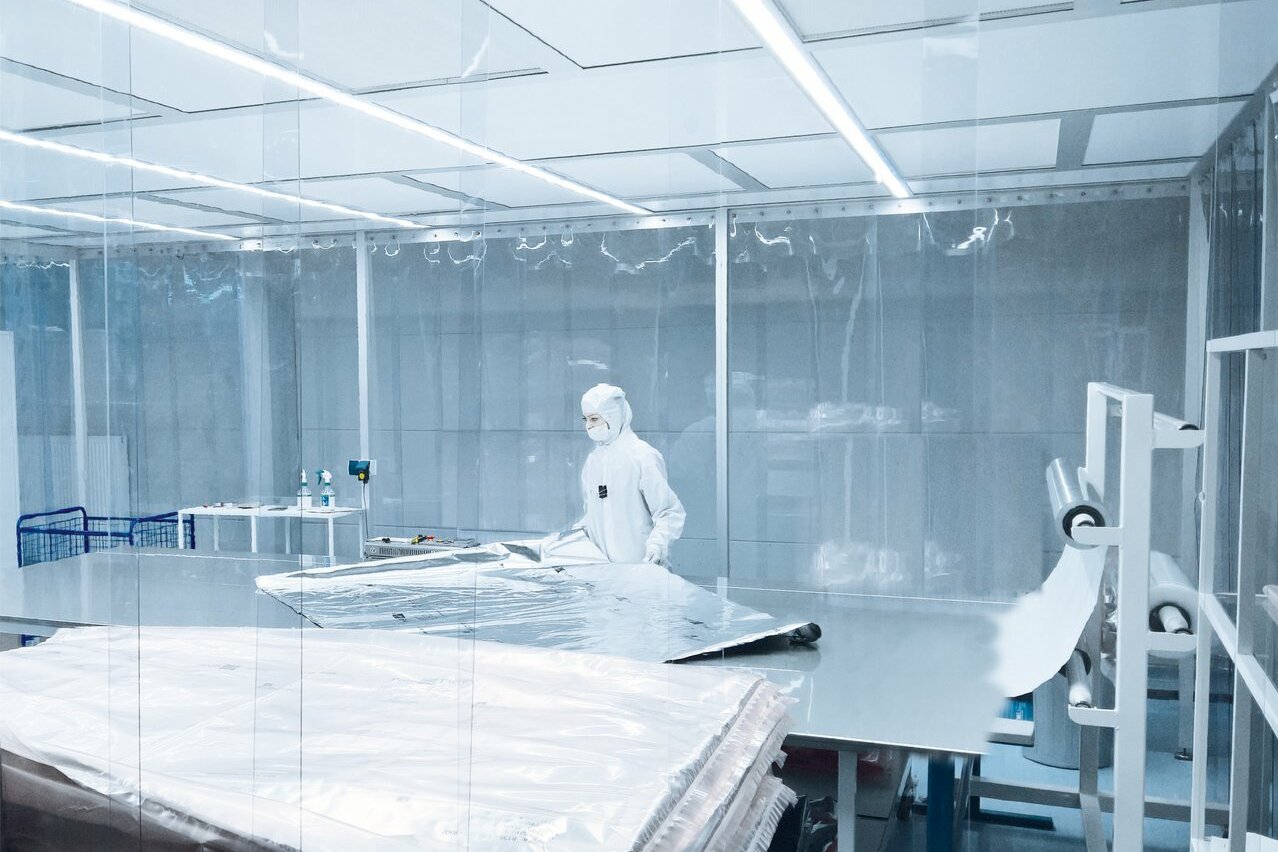
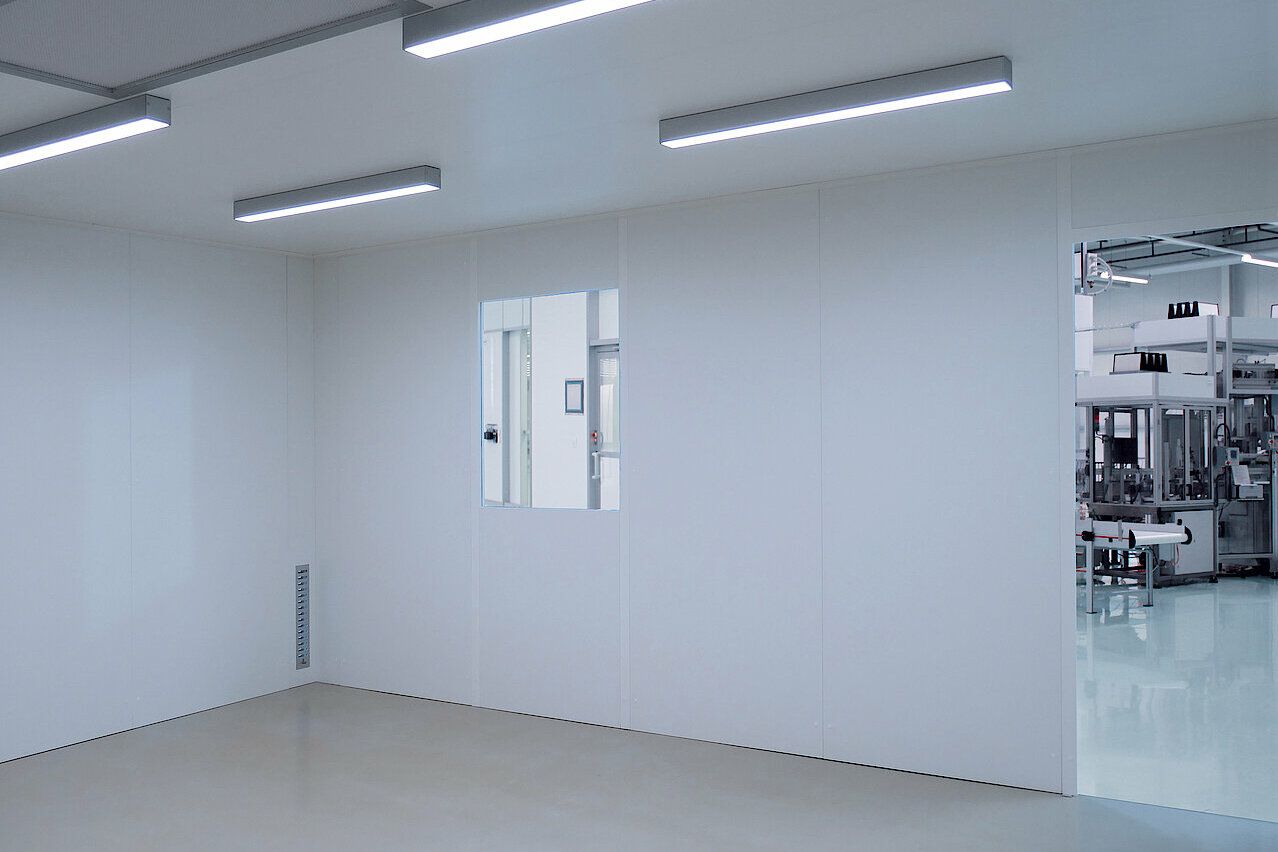
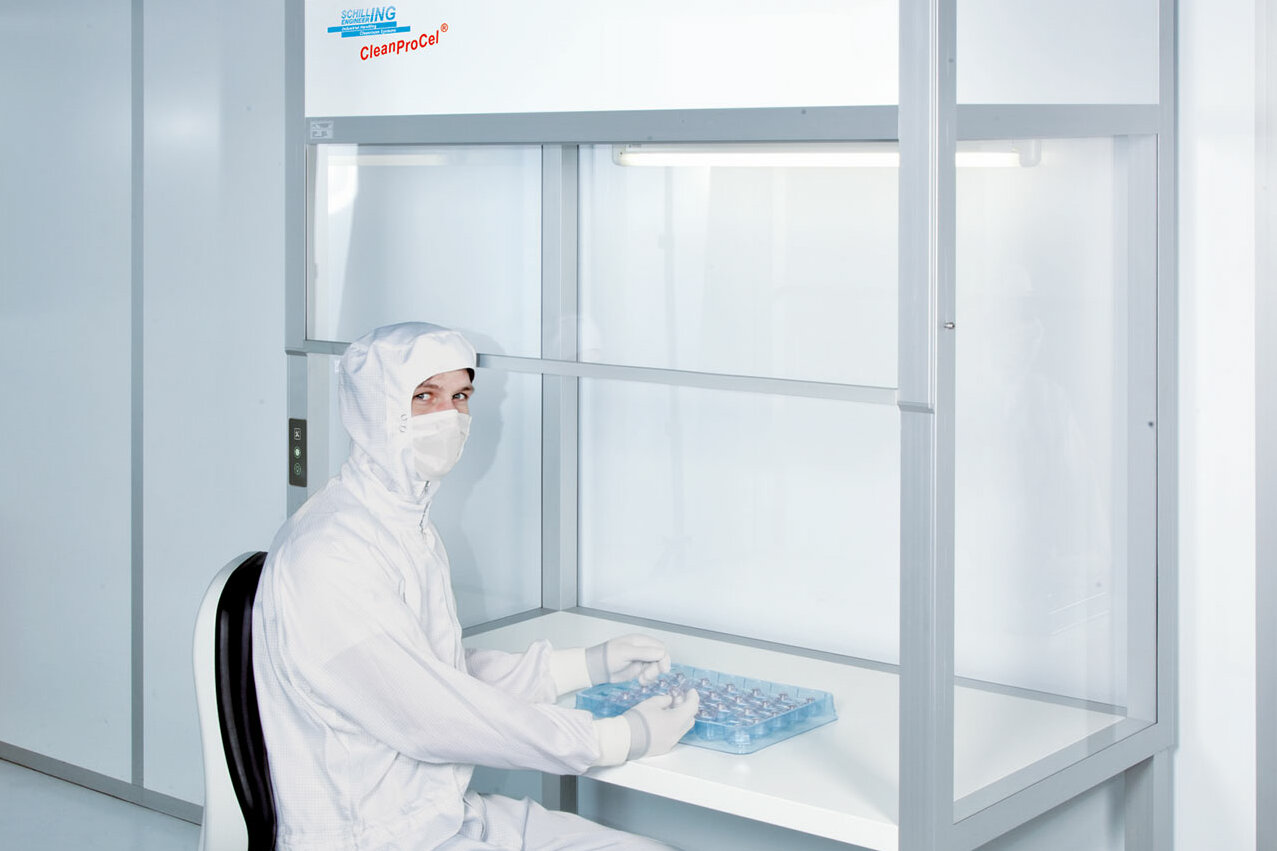
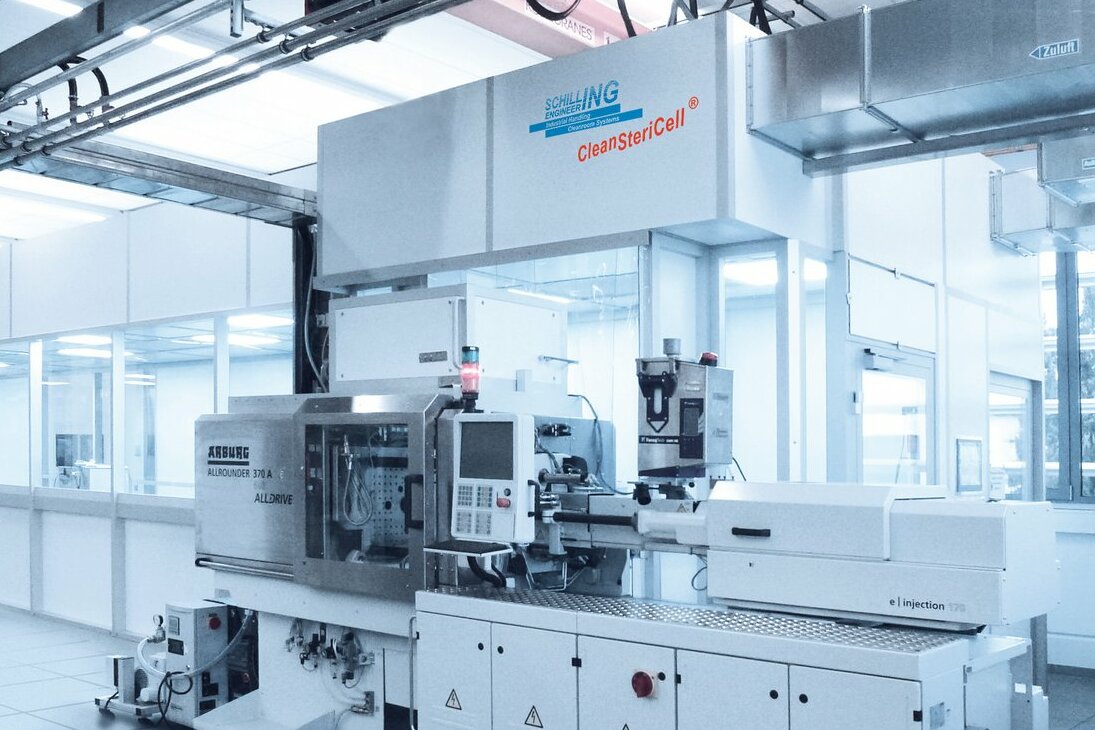
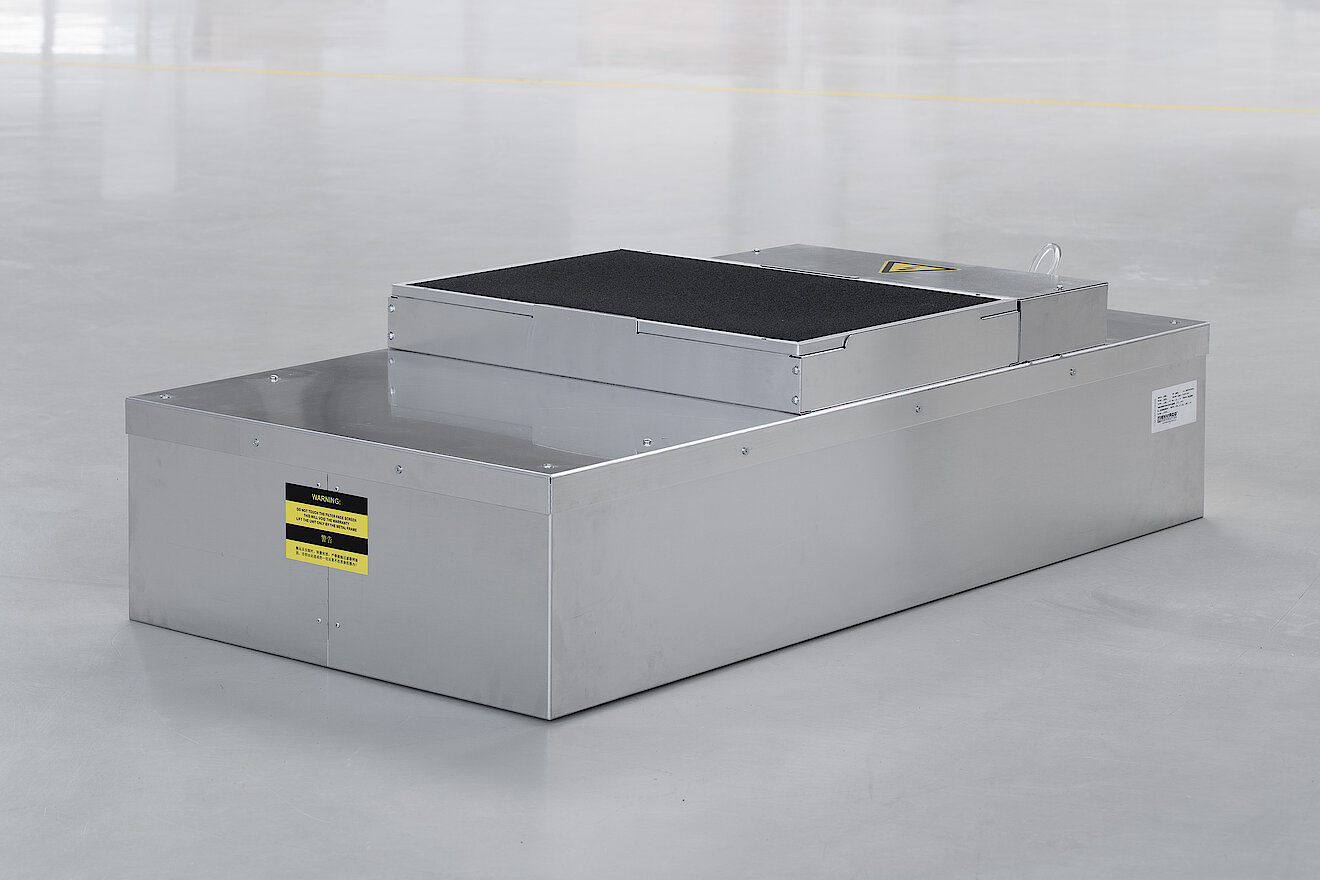
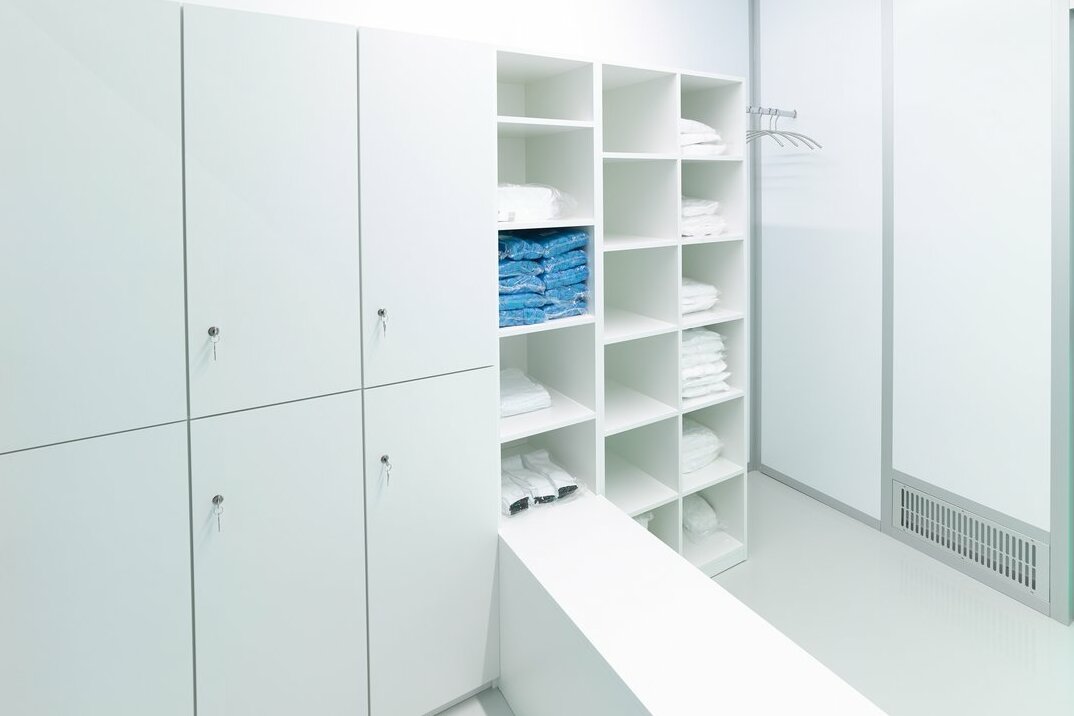
The term cleanroom technology covers all the technical and organisational measures used to control the number of particles introduced into or generated within the cleanroom. This includes the cleanroom system itself, with its filtration and recirculation systems, but also the structured introduction of materials and personnel, the specification of materials used, the cleaning of the cleanroom, monitoring and much more. Cleanroom technology is therefore much broader than just the cleanroom itself. The use and coordination of the various elements of cleanroom technology ensures a defined standard of quality and safety. By eliminating the harmful influence of particles and micro-organisms, quality and safety are significantly improved.
The use of cleanroom technology is therefore increasingly becoming the key to the reliability and cost-effectiveness of high quality products. Without controlled production processes under cleanroom conditions, many sensitive products can no longer be manufactured today, such as in the semiconductor industry, microtechnology or medical technology, where even the smallest particle deposits can render the end product unusable.
Another important aspect of cleanroom technology is the reduction of germs and micro-organisms, which is essential in the manufacture of medicines and pharmaceutical products, but also leads to significant quality improvements in the food and cosmetics industries.
When it comes to cleanrooms, there are various gradations that define the particle purity. These gradations are indicated in cleanroom classes according to the ISO standard with the numbers one to nine. The lowest cleanroom class ISO 1 describes the cleanest room and cleanroom class ISO 9 approaches the values of natural air in a room.
So if you want to achieve the cleanest of cleanrooms, you need an ISO 1 classification. For a detailed overview, please open the cleanroom classes PDF.
GMP ("Good Manufacturing Practice") is an English term that originally comes from the manufacture of pharmaceuticals and active ingredients. Good manufacturing practice" describes certain guidelines for quality assurance of the production processes and environment in the pharmaceutical industry.
The cleanroom classes according to GMP are based on the ISO standards in terms of particle concentration, but also have additional limits for harmful microorganisms. Cleanroom classes according to GMP are marked with the letters A to D, in contrast to the ISO standard.
Cleanroom class A describes the highest cleanliness level and cleanroom class D the lowest cleanliness level with the highest maximum permissible particle concentration. To get from the lowest to the highest cleanroom class according to GMP, the intermediate cleanroom classes C and B must also be passed through. You will find an overview of the permitted particle numbers in this table.
A cleanroom class table is an international standard to classify cleanrooms according to ISO 14644-1 and GMP. The International Organisation for Standardisation - ISO for short - is an independent organisation dedicated to setting international standards for procedures. The following cleanroom class table lists the internationally approved particle size for the different ISO cleanroom classes or cleanroom classes according to GMP.
So if you want to achieve the cleanest of cleanrooms, you need a cleanroom classification according to ISO 1. To achieve this, samples must be detected that have 10 or fewer particles with a size of 0.1 micrometres per cubic metre. From then on, the scale allows more and larger particles. In the ISO 5 cleanroom class, which meets the very strict requirements for microchip production, for example, up to 100,000 particles of 0.1 micrometres may be measured. Particles of 1.0 micrometres shall not exceed 823. Cleanroom class ISO 9 is the "worst" cleanroom class and is considered normal room air. In these rooms, particle sizes of 0.1 micrometres are no longer considered. Allowed here are 8,320,000 or fewer particles of 1 micron and 293,000 or fewer particles of 5 microns.